





It is a hot, humid week in LaPorte, the air conditioner is running hard, and there is water pooling around the furnace or dripping from a ceiling vent. The first question most homeowners ask is the right one: is this the air conditioner, or a plumbing leak? Usually it is the AC, and more specifically, a clogged condensate drain. Dye Plumbing & Heating has cooled and plumbed LaPorte homes since 1939, and because we run both trades under one roof, we can tell you exactly where the water is coming from. Here is how to read it before it turns into a bigger repair.
When water shows up around your indoor unit in the middle of summer, it is easy to assume a pipe is leaking. Often it is not a pipe at all. Your air conditioner does two jobs on a humid day: it cools the air, and it pulls moisture out of it. That moisture has to go somewhere, and when the path it normally takes gets blocked, it ends up on your floor.
Which system the water is coming from matters, because the fix is completely different. A condensate problem is solved at the air handler. A true plumbing leak is solved at the pipe. The trouble is that a condensate drain is a drain, sitting inside an air-conditioning system, so it lives right on the line between the two trades. That is exactly the spot where a company that only does one trade has to guess.
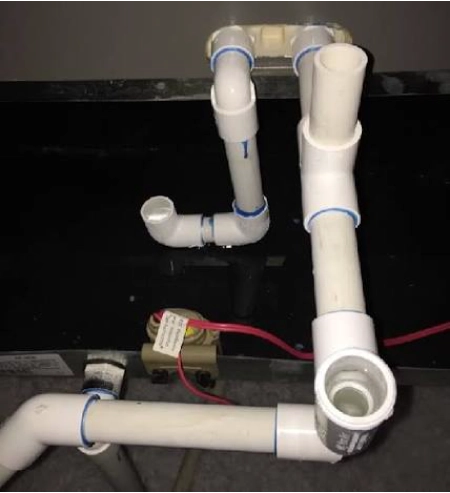
On a humid day, the evaporator coil inside your furnace or air handler condenses moisture out of the air. That water drips into a drain pan and exits the house through a condensate drain line. Over a season of running, that line collects algae, mold, and mineral scale. When it clogs, the water backs up, fills the pan, and overflows. Here are the causes, in the order a homeowner is most likely to run into them:
| Cause | What You'll See and What to Do |
|---|---|
| Most Common Cause | |
| Clogged condensate drain line | Water pooling under the furnace or air handler, or a steady drip during long, humid runs. Turn the AC off. Clear the drain access with a distilled-vinegar flush, or call for a professional clearing. |
| Other Causes to Check | |
| Cracked or rusted drain pan | Rust stains, and water on the floor even after the drain line is clear. The pan needs replacing. That is a service call, not a DIY fix. |
| Frozen evaporator coil | Ice on the coil or the refrigerant line, then a sudden overflow when it melts. Turn the system off and check the air filter. If it refreezes, call. It can mean low refrigerant. |
| Disconnected or cracked drain line | Water showing up away from the pan, near the line’s joints or elbows. The line has to be reseated or replaced to move the water back outside. |
| Missing or failed float switch | No automatic shutoff, so the first sign of trouble is water on the floor. Adding or replacing a float switch is a low-cost safety upgrade worth asking about. |
That last item, the float switch, is the safety net most homeowners have never heard of. A working overflow switch shuts the system off before the pan overflows. Per Trane’s troubleshooting guidance, that switch shuts down the compressor, the condenser fan, and the supply fan when it detects a backup, and not all air handlers include one. Many older LaPorte-area systems do not, which is why the first sign of a problem is water on the floor instead of an AC that quietly stops.
A condensate drain does not clog overnight. It clogs a little more each summer, because the same warm, damp, dark line that carries your AC’s runoff is an ideal place for algae and biofilm to grow. A line that drained fine in June can be marginal by August, and a heavy, humid stretch is often what tips a slow drain into a full backup and a wet floor.
That is why an annual condensate flush belongs on the same spring checklist as a filter change. Clearing the line before cooling season, and confirming the pan and float switch are sound, is far cheaper than drying out a ceiling. If your AC has leaked once, it will usually leak again on the same schedule unless the underlying line and pan are addressed, not just mopped up.
A water leak is a small problem if it is diagnosed correctly and a recurring headache if it is not. Because the water can come from the drain, the pan, a frozen coil, or an actual plumbing line, the single most important thing is an honest diagnosis of which one it is. Here is what to ask before anyone starts work:
At Dye, every repair proposal is clearly communicated before any work begins, and we can email your estimate. Because we run plumbing and cooling under one license, we can rule the plumbing side in or out on the same visit instead of sending you to a second company. You get one diagnosis, one crew, and a clear number before the work starts, not a surprise on the invoice.
Dye Plumbing & Heating was founded in LaPorte in 1939, and running both trades is the whole point on a call like this. Our field team includes three Indiana Plumbing Contractors, the top license tier in the state, two Journeyman Plumbers, and one Registered Apprentice training through Indiana Registered Apprenticeship Program #IN020104132, alongside NATE certified HVAC technicians. We are a Google Guaranteed provider operating under Indiana Plumbing Contractor License PC#10500518, and our technicians are not on commission. Homeowners have left a 4.8-star average across 410+ Google reviews. On a water-on-the-floor call, that combination means one crew reads the whole system, coil to drain to plumbing line, and tells you the truth about what it found.
If water is showing up around your air conditioner in LaPorte, Michigan City, Valparaiso, or anywhere across Northwest Indiana, call Dye Plumbing & Heating at 219-362-6251 or book online. We will send a technician who can read the whole system, plumbing and cooling both, and clearly communicate the repair proposal before any work begins. We can email your estimate.
219-362-6251
© Red Barn Media Group 2026